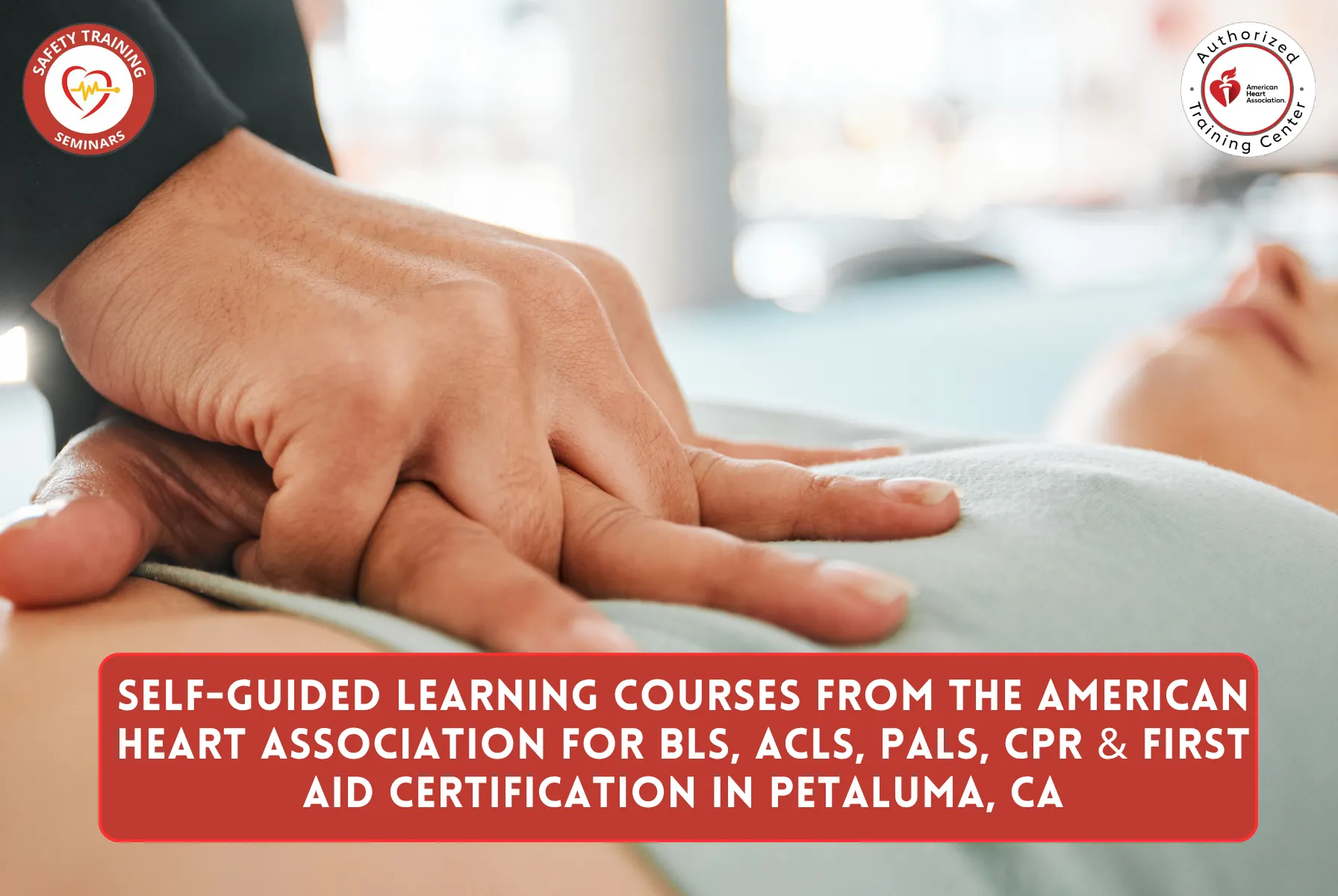
For people in Petaluma who need CPR or life-support training, the biggest question is not always which class is available. Often, it is how the training fits around work, school, clinical responsibilities, or other commitments. American Heart Association Self-Guided Learning provides an option for learners who want to complete applicable educational material independently while still meeting hands-on practice or skills requirements when those components apply.
The format can be relevant to several types of training, including BLS, ACLS, PALS, CPR, AED, and First Aid. These courses serve different audiences, though, so choosing the correct one matters. A nursing student may be looking for BLS, while a healthcare professional responsible for adult cardiovascular emergencies may need ACLS. A teacher, childcare provider, or workplace employee may instead need CPR/AED or First Aid training.
For Petaluma learners, understanding how Self-Guided Learning works—and how it differs from an online-only course—can make it easier to select an appropriate training path.
Key Takeaway
AHA Self-Guided Learning allows eligible learners to work through the educational portion of applicable training at their own pace. Depending on the course, completing the full training may also involve hands-on practice and skills testing, so learners should verify the requirements of their particular course before enrolling.
What Is American Heart Association Self-Guided Learning?
Self-Guided Learning is a training format that gives learners more control over when they complete the educational component. Rather than attending a traditional classroom session for every part of the course, the learner works independently through the applicable learning material.
That flexibility can be particularly useful for someone whose schedule changes from week to week. A healthcare student may have clinical rotations, a working professional may have irregular shifts, and an educator may have limited availability during the school day.
Self-Guided Learning does not necessarily mean that every part of training happens online. Where a course requires hands-on skills practice or skills verification, those requirements remain part of the overall learning process.
A learner’s path may generally look like this:
- Identify the course required by the employer, school, or organization.
- Complete the applicable educational material independently.
- Participate in required hands-on skills practice.
- Complete applicable skills testing or other course requirements.
- Receive the appropriate course completion documentation or eCard after successfully completing the requirements.
The exact process can differ by course, so learners should always review the details of the specific training they are considering.
BLS Classes in Petaluma for Healthcare Learners
Basic Life Support (BLS) is generally intended for healthcare professionals and other learners whose responsibilities call for a higher level of basic life-support training than general-public CPR.
Potential BLS learners include nurses, nursing students, physicians, EMTs, paramedics, medical assistants, dental professionals, and other healthcare personnel. Whether BLS is required depends on the individual’s role and the requirements established by a particular employer, school, or healthcare organization.
For a nursing student completing clinical preparation in the Petaluma area, for example, the important question is whether the program specifically requests BLS rather than a general CPR course.
People researching BLS and CPR classes in Petaluma should compare the course information with the requirement they have been given before selecting a training format.
ACLS Training in Petaluma
Advanced Cardiovascular Life Support (ACLS) is designed for appropriate healthcare professionals involved in managing adult cardiovascular emergencies.
ACLS is different from BLS because it addresses advanced cardiovascular emergency care rather than serving as a general substitute for basic life-support training. Doctors, nurses, paramedics, and other healthcare professionals may encounter ACLS requirements depending on their responsibilities.
A professional working in a clinical setting should confirm whether ACLS is required by their employer or organization before registering. The same principle applies to healthcare students whose programs specify particular course requirements.
For someone considering ACLS through a Self-Guided Learning format, it is important to understand which portions are completed independently and which course requirements must be completed through applicable hands-on or skills components.
PALS Classes in Petaluma
Pediatric Advanced Life Support (PALS) focuses on emergency care involving pediatric patients and is intended for appropriate healthcare professionals.
PALS may be relevant to healthcare workers whose responsibilities involve pediatric patients or pediatric emergency care. A professional should not assume that completing BLS or ACLS automatically satisfies a PALS requirement.
A healthcare worker in Petaluma who works with children can first check whether their employer, clinical program, or healthcare organization specifically requires PALS. After identifying the requirement, the learner can investigate the available course format and determine whether Self-Guided Learning is appropriate.
CPR, AED and First Aid Training
CPR, AED, and First Aid training can be relevant to a much wider group than advanced healthcare courses.
Teachers, childcare workers, coaches, fitness professionals, workplace employees, caregivers, parents, and other community members may encounter requirements for one or more of these courses.
CPR/AED training generally addresses CPR-related response and AED use, while First Aid training covers a broader range of injuries and medical situations. An organization may request one course or a combination depending on the person’s responsibilities.
For example, a childcare provider may need a specific CPR and First Aid course, while a workplace employee may be asked to complete CPR/AED training. The appropriate choice depends on the organization’s stated requirements.
How Do You Know Which Course You Need?
Selecting a course based only on a familiar acronym can lead to confusion. The following comparison provides a useful starting point:
| Course | Typical Audience |
| BLS | Healthcare professionals and appropriate healthcare students |
| ACLS | Healthcare professionals involved in adult cardiovascular emergency care |
| PALS | Healthcare professionals involved in pediatric emergency care |
| CPR/AED | General public and workplace audiences |
| First Aid | Workplace, education, childcare, community, and general audiences |
These categories describe typical audiences rather than universal requirements. A nursing program may have different expectations from a hospital employer, and a workplace requirement may differ from a licensing organization’s expectations.
Before registering, confirm the exact course with your employer, school, healthcare organization, training program, or applicable licensing organization.
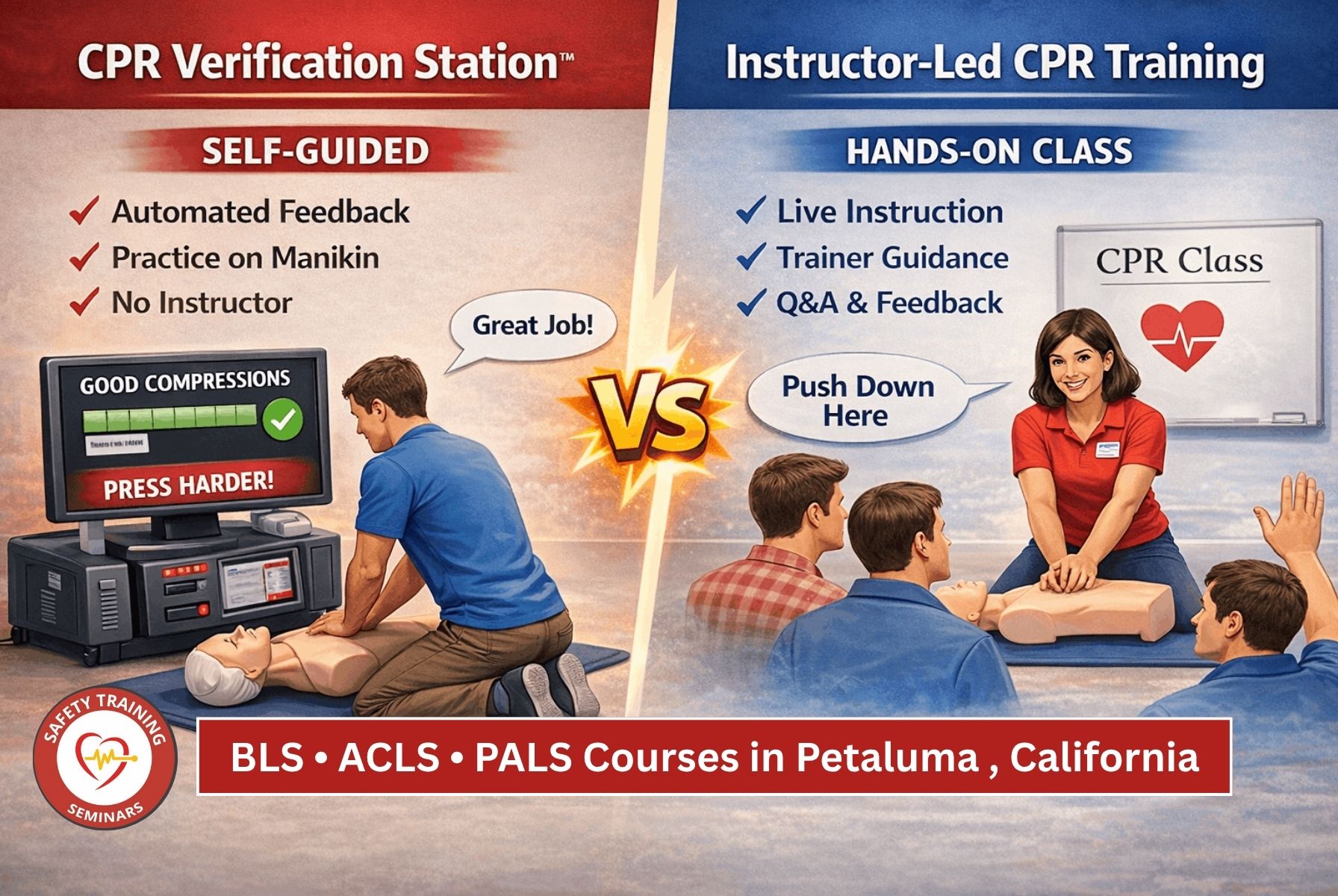
Self-Guided Learning vs. Classroom and Online-Only Training
The phrase “online training” can mean different things, so it helps to separate three common approaches.
Self-Guided Learning
With Self-Guided Learning, the learner independently completes the applicable educational material. This can provide more control over when learning takes place. Depending on the course, hands-on skills practice and testing may still be required.
Traditional Classroom Training
Traditional classroom training normally involves attending scheduled sessions at set times. Learners receive direct interaction during the classroom portion and follow the schedule established for the course.
Online-Only Training
An online-only course may consist primarily or entirely of digital instruction. That format may not satisfy a requirement that specifically calls for hands-on skills practice or another accepted course format.
The goal is not to label one approach as universally better. Instead, learners should identify the format their employer, school, or organization accepts and then choose accordingly.
Why Self-Guided Learning Can Be Useful in Petaluma
Petaluma has a varied group of people who may need life-support training. Healthcare workers may be balancing shifts with continuing education. Nursing or allied-health students may have classes and clinical obligations. Teachers and childcare workers can have schedules that make a fixed classroom session difficult.
There are also people who travel between Petaluma and surrounding communities for employment, education, or other responsibilities. For these learners, completing the educational component independently can make training easier to fit around an existing schedule.
Self-Guided Learning does not remove the need to complete applicable course requirements. Instead, it changes how the educational portion can be approached. Learners should check the course details before assuming that independent learning covers every required component.
Finding a Local Training Option in Petaluma
For learners who prefer to investigate a local option, Safety Training Seminars provides a Petaluma training location at 921 Transport Way, Suite 30, Petaluma, CA 94954.
The right starting point depends on the course you need. A healthcare professional may want to investigate BLS, ACLS, or PALS, while a teacher, caregiver, or workplace employee may need CPR/AED or First Aid.
Before registering, review the course information carefully. Confirm the exact course name, determine whether hands-on skills practice or testing applies, and compare the completion requirements with those provided by your employer or school.
Learners can also review Petaluma CPR, BLS, ACLS and PALS course options when determining which local training path best fits their requirement.
What Should You Verify Before Starting?
Before committing to a course, check these practical points:
- Course type: Is the requirement BLS, ACLS, PALS, CPR/AED, First Aid, or another specific course?
- Training format: Does the organization accept the Self-Guided Learning format?
- Skills requirements: Are hands-on practice or skills testing required?
- Completion documentation: What documentation or eCard does the organization expect?
- Provider requirements: Does your employer or school have additional conditions?
Doing this verification first can save time and reduce the possibility of completing a course that does not match the requirement.
Frequently Asked Questions
Is AHA Self-Guided Learning completely online?
Not necessarily. Self-Guided Learning can include an independent educational component, but applicable courses may also require hands-on practice or skills verification. The specific requirements depend on the course. Anyone completing training for work or school should check the course details rather than assuming that all requirements can be completed remotely.
Should a healthcare student in Petaluma choose BLS or CPR?
A healthcare student should follow the requirement provided by their educational program. BLS is generally associated with healthcare professionals and appropriate healthcare students, while general CPR/AED courses are often intended for broader audiences. If the student’s program specifically requests BLS, the student should verify that requirement before enrolling.
Can ACLS and PALS be treated as the same type of training?
No. ACLS is designed around adult cardiovascular emergency care, while PALS focuses on pediatric emergency care. A healthcare professional should select the course that corresponds to their role and the requirement established by their employer, school, or organization.
Is Self-Guided Learning useful for people with changing schedules?
Yes, it can be useful for learners who need flexibility around the educational portion of training. Healthcare employees with variable shifts, students with clinical commitments, and working professionals may appreciate being able to complete applicable learning material independently. Any required hands-on or skills components still need to be completed.
Where can someone in Petaluma investigate local AHA training?
Safety Training Seminars has a local Petaluma training location that learners can investigate when looking for applicable life-support or CPR-related training. The best option depends on the course requirement. Review the available course information and confirm the required format with your employer, school, or organization before registering.
Final Considerations for Petaluma Learners
American Heart Association Self-Guided Learning can give eligible learners greater control over the educational portion of their training, but it should not automatically be confused with an online-only course. Depending on the course, hands-on practice and skills testing may remain part of the completion process.
For Petaluma healthcare professionals and students, identifying whether BLS, ACLS, or PALS is required should come before choosing a training format. For teachers, childcare providers, workplace employees, caregivers, and other community members, CPR/AED or First Aid may be the more relevant option.
Once the requirement is clear, review the applicable Safety Training Seminars course information for Petaluma and confirm the details before enrolling. Choosing the course first and the format second is the simplest way to keep your training aligned with your actual requirement.