People in Petaluma, CA seek CPR training for many reasons. A nursing student may need Basic Life Support before clinical placement, a teacher may need pediatric CPR and First Aid, and a workplace supervisor may be responsible for arranging safety training. These situations sound similar, but they do not always require the same course.
In 2026, the safest way to choose a class is to start with the exact requirement from your employer, school, licensing board, or organization. Then compare the course type, training format, skills component, and location. This guide explains how CPR and BLS courses differ, who commonly needs each option, what to expect during training, and how Petaluma residents can prepare before registering.
Key Takeaway: A BLS CPR Certification Course is generally intended for healthcare professionals and medically focused roles, while CPR and First Aid may be more appropriate for workplaces, schools, fitness settings, childcare, and families. Confirm the required course title and accepted format before enrolling.
Start With the Requirement, Not the Course Name
Many registration mistakes happen because someone sees “CPR” in a course title and assumes it will satisfy every requirement. Employers and schools may instead ask for a specific course, skills evaluation, or training format.
Before choosing a Petaluma CPR class, find the exact wording in your onboarding email, school checklist, employee handbook, renewal notice, or licensing instructions. Check whether the requirement mentions:
- Basic Life Support or BLS
- CPR and AED
- First Aid
- Adult, child, or infant skills
- An in-person skills demonstration
- Initial certification or renewal
If the instructions are unclear, ask the requesting organization before registering. A short confirmation can prevent you from completing training that is not accepted for your role.
Petaluma residents can compare course categories on the local CPR, BLS, ACLS, and PALS course page before deciding which option matches their requirement.
BLS and General CPR Training Serve Different Audiences
BLS stands for Basic Life Support. It is commonly associated with healthcare professionals, clinical students, emergency-response personnel, and others expected to use CPR skills in a medical or team-based setting.
General CPR training is often designed for people outside clinical healthcare, including teachers, coaches, childcare providers, fitness professionals, parents, caregivers, office teams, and workplace safety staff.
The main difference is the professional context, depth of training, and expectations placed on the learner. A nursing student may need BLS for clinical placement, while a youth sports coach may need CPR, AED, and First Aid with pediatric content. A dental employee or medical assistant should confirm whether the organization specifically requires BLS.
Which Course Fits Your Role in Petaluma?
Course selection becomes easier when you connect the requirement to the setting in which the skills may be used.
Healthcare and Clinical Roles
Nurses, nursing students, medical assistants, dental professionals, therapy staff, and other clinical workers may be asked to complete BLS. Some advanced healthcare roles may also require ACLS or PALS, but these courses are not substitutes for one another.
Schools, Childcare, Fitness, and Recreation
Teachers, childcare providers, camp staff, coaches, personal trainers, and recreation employees may need CPR, AED, or First Aid training. The employer, licensing agency, or certifying organization should specify whether pediatric content or an additional course is required.
Workplaces and Community Settings
Office teams, retail employees, hospitality workers, construction crews, and community volunteers may take CPR, AED, or First Aid as part of a workplace safety plan. The appropriate course depends on job duties and organizational policy.
Residents who work or study closer to Rohnert Park can review CPR and healthcare certification options in Rohnert Park when comparing nearby locations.
What to Expect From the Training Process
The exact structure varies by course, but most learners follow a similar process.
First, confirm the required certification and register for the correct class. If the course uses a blended format, an online portion may need to be completed before the in-person session.
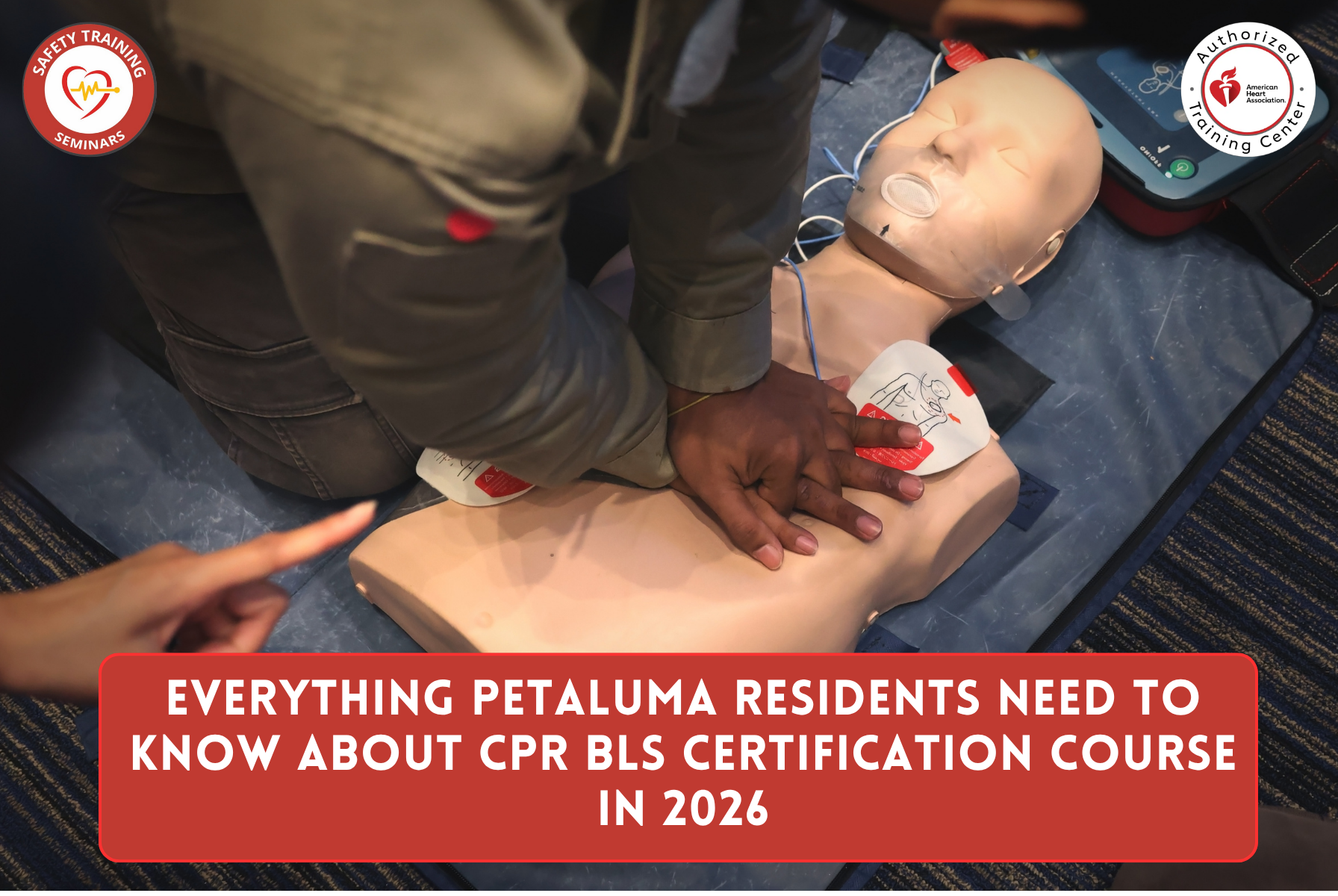
During skills practice, participants may work on CPR techniques, AED use, choking response, or other course-specific procedures. Some courses may also include written questions, scenarios, or a skills evaluation.
After completing the required components, keep your documentation available for an employer, school, clinical program, or professional record. The registration instructions should explain what must be completed beforehand and what to bring.
Online, Blended, and In-Person Options
Course format matters because online-only training may not meet every workplace or school requirement.
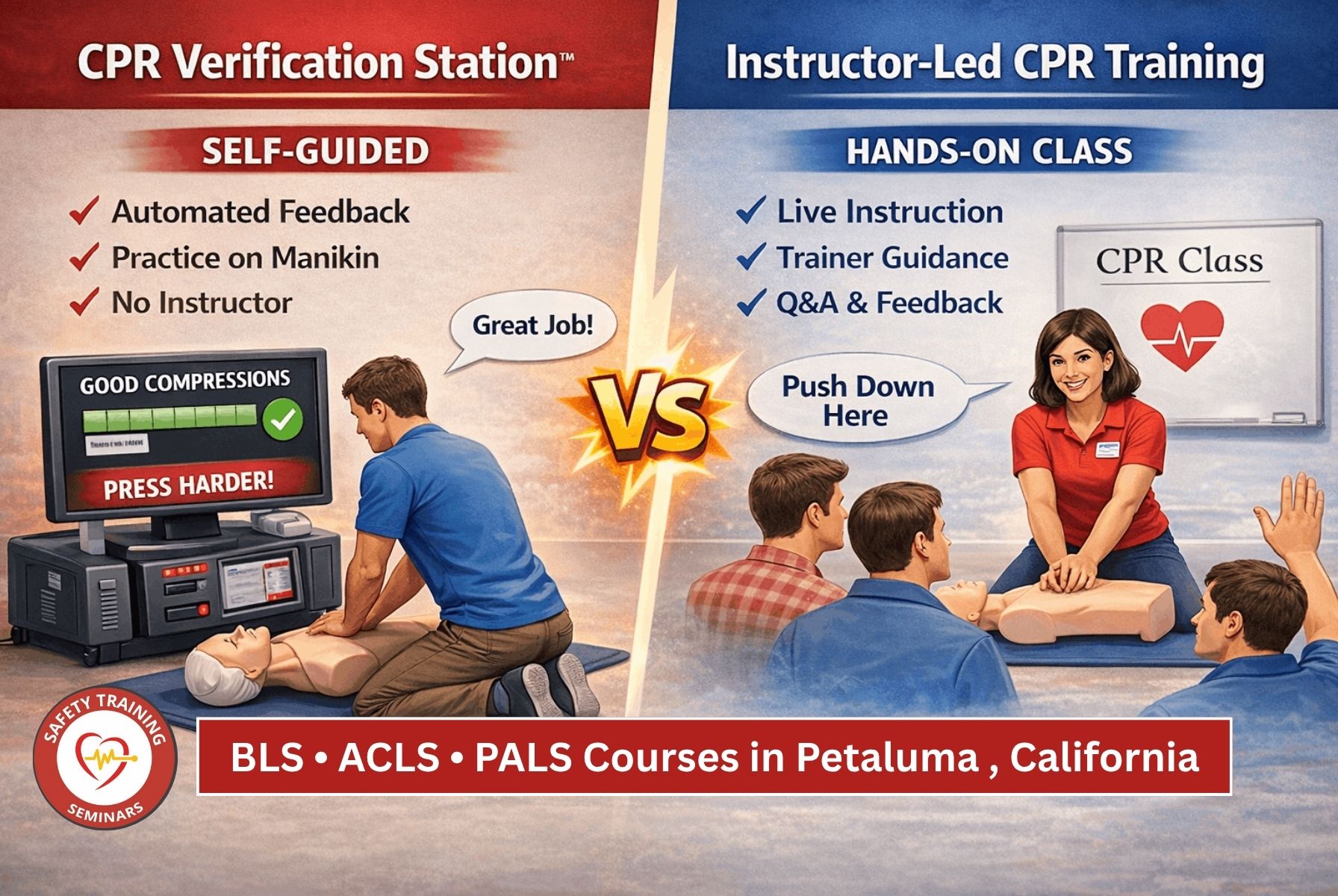
Online-only training delivers instruction digitally without an in-person skills check. It may be useful for general education, but acceptance varies.
Blended learning combines online instruction with an in-person skills session. Learners complete part of the course independently and then demonstrate required skills.
In-person training places instruction and skills practice in a classroom or training setting. This may suit learners who prefer direct guidance throughout the process.
Do not choose a format based only on convenience. Ask the organization requesting certification whether hands-on practice is required and which delivery methods it accepts.
People commuting from the north can also review the Santa Rosa CPR and BLS course location when comparing nearby options.
How to Prepare and Avoid Registration Problems
Start by checking the course title, date, location, and pre-course instructions. Complete assigned online work on time, bring requested identification or confirmation details, and wear comfortable clothing suitable for hands-on practice.
Ask your employer or school how documentation should be submitted, and keep a copy for your records. If you are renewing, do not assume the process will be identical to your previous class because employer policies and course formats may change.
Common problems include registering for general CPR when BLS is required, choosing an online-only certificate without checking acceptance, and waiting too close to a workplace or school deadline. The practical rule is simple: confirm first, register second, and save your documentation after completion.
A Local Option for Petaluma and Nearby Communities
Safety Training Seminars provides local course information for Petaluma residents, healthcare workers, students, workplace teams, caregivers, and members of the public. The Petaluma training center is located at 921 Transport Way, Suite 30, Petaluma, CA 94954.
A local class may be useful for learners who need hands-on skills practice or must complete training around work, school, or family responsibilities. People traveling from Cotati, Rohnert Park, Santa Rosa, Sebastopol, or Sonoma should compare the required course and location before registering.
Those closer to Cotati can review the Cotati CPR, BLS, ACLS, and PALS course information as another nearby option. Whichever location you select, verify that the course matches the exact requirement provided by your employer, school, or licensing organization.
Frequently Asked Questions
Do All Healthcare Workers in Petaluma Need BLS Certification?
No. BLS is commonly requested for many clinical and healthcare roles, but the requirement depends on the employer, school, licensing board, or professional program. Review the exact instructions for your position before registering.
Is CPR and First Aid the Same as BLS?
No. The courses may cover related emergency-response skills, but they are designed for different audiences and settings. BLS is generally more healthcare-focused, while CPR and First Aid may suit workplaces, schools, childcare, fitness, and community roles.
Can I Take a CPR Class in Petaluma if I Live in Cotati or Rohnert Park?
Yes. Learners can usually choose a nearby location as long as the correct course is offered and the format meets their requirement. Compare travel needs, course type, and registration information before selecting a location.
What Should I Bring to a Petaluma BLS or CPR Class?
Bring any identification, registration confirmation, or pre-course documentation listed in the instructions. Wear comfortable clothing for skills practice and complete any required online portion before attending.
How Do I Know Whether an Online CPR Certificate Will Be Accepted?
Ask the employer, school, licensing board, or organization requesting certification. Some requirements include an in-person skills demonstration, while others may accept different formats. Get confirmation before enrolling in an online-only option.
Make the Right Certification Decision Before Registering
Petaluma residents should begin by identifying the exact course required for their job, school, clinical placement, license, or personal goal. BLS may be appropriate for healthcare-focused roles, while CPR, AED, and First Aid training may better fit educators, childcare providers, fitness professionals, workplaces, parents, and caregivers.
Once the requirement is clear, compare the training format, hands-on component, location, and preparation steps. Safety Training Seminars provides course-location information for Petaluma and surrounding communities, helping learners review local options instead of relying on a generic listing. The practical next step is to review the Petaluma course page, confirm the current course category and registration details, and verify acceptance with the organization requesting certification.